
Sealants
A thin, protective coating painted onto the chewing surfaces of back teeth that seals out food and germs to help prevent cavities.
What it is
What are dental sealants?
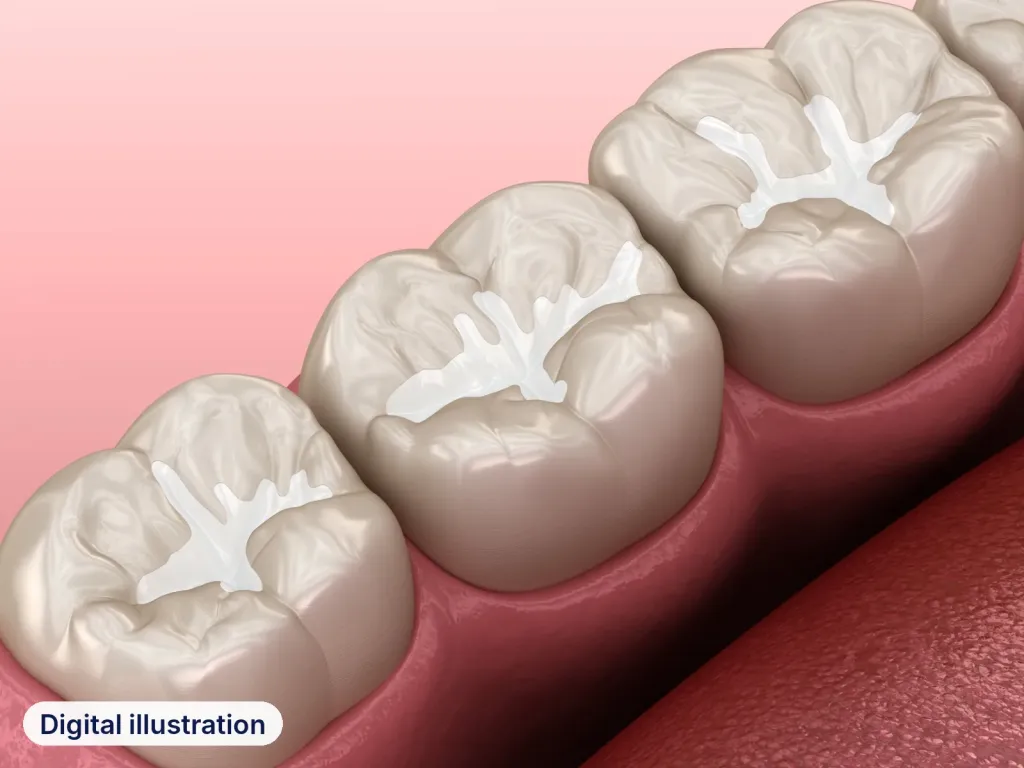
Your back teeth have deep grooves on their chewing surfaces. Food and germs settle into these grooves, and toothbrush bristles can't always reach all the way in. That's why most cavities start in the back teeth.
A sealant is a thin, tooth-colored coating we paint into those grooves. It hardens into a smooth shield that keeps food and germs out. Sealants are most often placed on kids' permanent molars as soon as they come in, but teens and adults with deep grooves can benefit too.
What to expect
Your visit, step by step.
-
1
Clean the tooth
We polish the chewing surface so it's clean and free of plaque before we begin.
-
2
Prepare the surface
A gentle gel helps the sealant bond. We rinse it off and keep the tooth dry with cotton.
-
3
Paint it on
We brush the liquid sealant into the grooves. There's no drilling and no numbing needed.
-
4
Harden with light
A small blue light sets the sealant in seconds, and your child can eat normally right after.
Why it matters
Why sealants are worth it
- Protects the deep grooves where most cavities start
- Quick and painless, with no shots or drilling
- Often lasts several years before it needs a touch-up
- Helps kids avoid fillings in their new permanent molars
- Works alongside brushing, flossing and fluoride
Cavity protection
80% fewer
According to the CDC, sealants prevent about 80% of cavities in back teeth over two years, and back teeth are where 9 in 10 cavities happen.
Questions
Sealant FAQs
Who should get sealants?
Sealants are most helpful for kids and teens, placed as soon as their permanent back molars come in. Adults with deep grooves and no fillings in those teeth can benefit too. We'll let you know which teeth would benefit.
Does getting a sealant hurt?
No. There's no drilling and no numbing. Most kids say the hardest part is keeping their mouth open for a few minutes.
How long do sealants last?
Sealants often last for several years. We check them at your regular visits and touch them up if any wear down or chip.
My child's school offers sealants. Why get them here instead?
School sealant programs are a great way to protect kids' teeth, but not every program includes an exam by a dentist first. Before we place a sealant, one of our dentists checks each tooth to make sure there's no hidden decay underneath, so nothing gets sealed in. We also stand behind our work: if a sealant we placed chips or wears down, we'll touch it up at no charge.
Do sealants replace brushing and flossing?
No. Sealants protect the chewing surfaces of back teeth, but brushing, flossing and fluoride are still needed to protect every other surface of every tooth.
Are sealants covered by insurance?
Many dental plans cover sealants on children's permanent molars. We'll check your benefits and let you know before we begin.
Ready to book your visit?
Schedule a visit that fits your day. We'll answer your questions and help you choose the care that's right for you.