
Dental Cleanings
A gentle, thorough cleaning that removes the buildup brushing and flossing miss, so small problems stay small.
What it is
What happens during a dental cleaning?
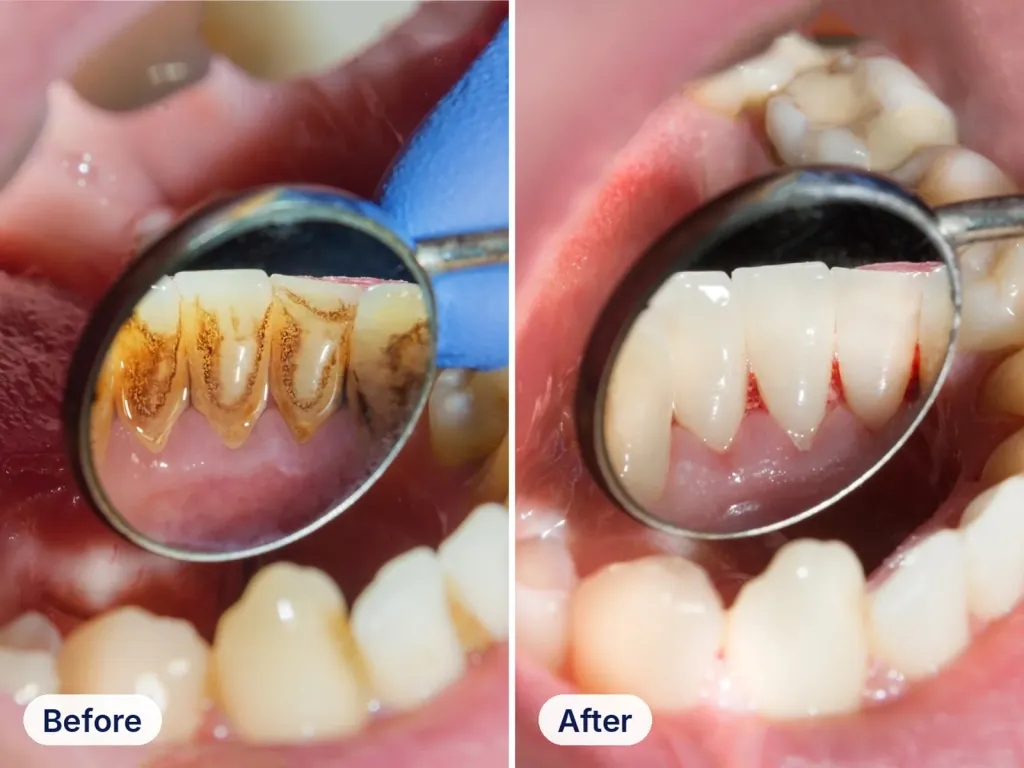
Even with great brushing and flossing, a sticky film called plaque builds up on your teeth. Over time it hardens into tartar, which a toothbrush can't remove. Left alone, tartar can lead to cavities, gum disease and bad breath.
During a professional cleaning, one of our hygienists carefully removes that buildup from above and just below the gumline, polishes your teeth smooth, and checks your gums for early signs of trouble. Most visits take about an hour, and you can ask us to pause at any time.
What to expect
Your visit, step by step.
-
1
A quick check-in
We review your health history, ask about any sensitivity, and talk through anything you'd like us to look at.
-
2
Gentle scaling
Your hygienist uses small instruments to lift away plaque and tartar, including along and just under the gumline.
-
3
Polish & floss
A gritty paste polishes away surface stains, then a professional floss leaves every space between teeth clean.
-
4
Exam & next steps
The dentist checks your teeth and gums, answers questions, and explains any care you might need, with costs upfront.
Why it matters
Benefits of regular cleanings
- Prevents cavities by removing the plaque that causes them
- Helps stop gum disease before it starts or worsens
- Brightens your smile by polishing away coffee, tea and food stains
- Freshens breath that brushing alone can't fix
- Catches small problems early, when they're simpler and less costly to treat
How often
Every 6 months
Most people do best with a cleaning twice a year. If you're prone to gum issues, we may suggest a visit every three or four months.
Questions
Dental cleaning FAQs
Does a cleaning hurt?
For most people it doesn't. You may feel some scraping or pressure, and sensitive spots can feel tender. Let us know and we'll slow down, use a numbing gel, or take a break.
Is a cleaning covered by insurance?
Most dental plans cover two preventive cleanings a year, often at little or no cost to you. We'll check your benefits before your visit.
Why does there need to be an exam and x-rays before cleanings?
An exam and x-rays show what we can't see on the surface, like cavities between teeth, bone loss or tartar below the gums. That tells us which type of cleaning you need, from a routine cleaning to a deep cleaning, so your treatment is safe and actually fits your mouth. We only take x-rays as often as your needs call for.
What's a deep cleaning?
If tartar has built up deep below the gumline, we may recommend scaling and root planing, a more thorough cleaning done in one or two visits to help gums heal.
Ready to book your visit?
Schedule a visit that fits your day. We'll answer your questions and help you choose the care that's right for you.