
Root Canals
If a tooth needs a root canal, we'll get you comfortable, guide you to the right care, and protect the tooth with a crown once it's treated.
What it is
Root canals, explained
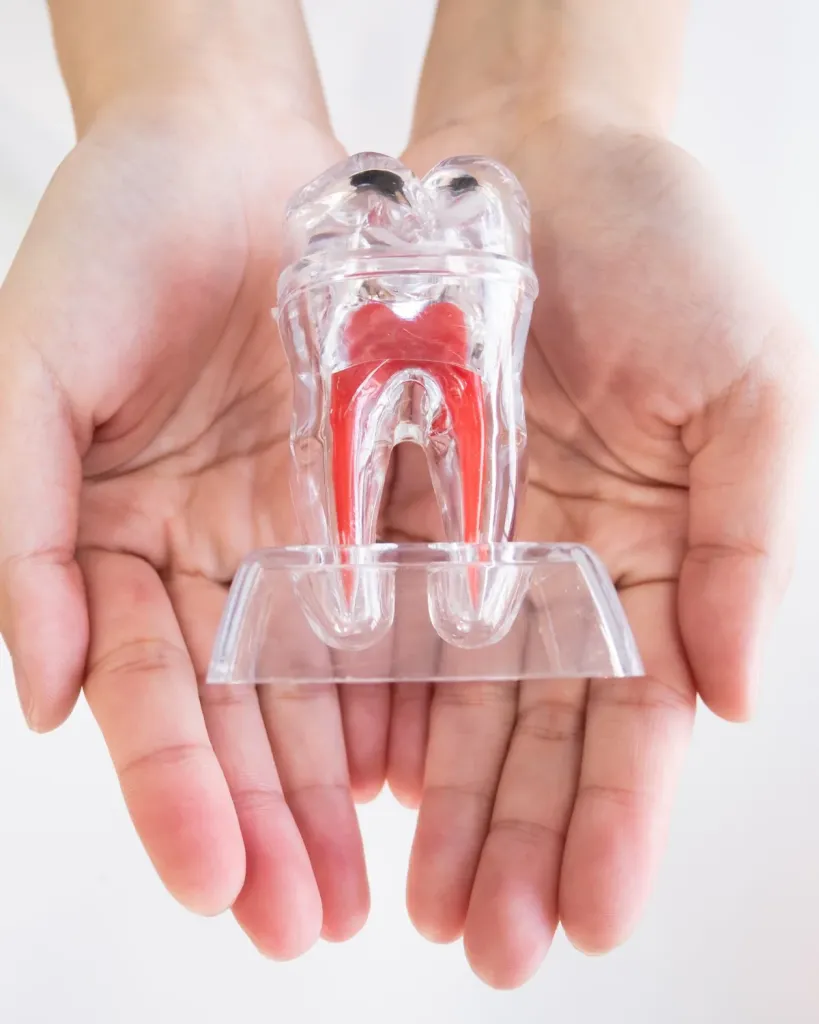
Inside every tooth is a soft core called the pulp, which holds the tooth's nerve and blood supply. When deep decay, a crack or an injury lets bacteria reach the pulp, it can become inflamed or infected. That often causes throbbing pain, lingering sensitivity to hot or cold, swelling, or a tooth that turns darker. A root canal removes the infected pulp, cleans and seals the inside of the tooth, and lets you keep your natural tooth instead of losing it.
We often work with an endodontist. An endodontist is a root canal specialist with two to three extra years of training after dental school. They use tools like dental operating microscopes to find and treat even tiny, curved canals. We evaluate every tooth individually, and for many root canals we work with a trusted local endodontist to give your tooth the best chance of lasting for years.
Our role. We diagnose the problem, help get you out of pain, and recommend the right path for your tooth. When an endodontist is the best choice, we send your records and x-rays ahead so the hand-off is smooth. Once your root canal is done, you come back to us to protect the tooth.
Why we always recommend a crown on back teeth. A tooth that's had a root canal can become more brittle, and back teeth take the most force when you chew. A crown covers and protects the chewing surface, including the raised points called cusps, so the tooth is far less likely to crack. Research backs this up: in a study published in the Journal of Prosthetic Dentistry, teeth that didn't get a crown after a root canal were lost about six times as often as teeth that did.
What to expect
Your visit, step by step.
-
1
Diagnose and relieve
We examine the tooth, take an x-ray, and do what we can to ease your pain right away.
-
2
The right care
We recommend the best path for your tooth. When that's an endodontist, we refer you and send your records ahead.
-
3
Root canal treatment
The inside of the tooth is gently cleaned, disinfected and sealed to clear the infection.
-
4
Back to us for a crown
You return to our office, where we place a crown to protect the tooth for the long run.
Why it matters
Signs you may need a root canal
- Severe or throbbing toothache
- Sensitivity to hot or cold that lingers
- Pain when biting or chewing
- Swelling or a small bump on the gum
- A tooth that has turned gray or dark
Why a crown matters
6x
In a study published in the Journal of Prosthetic Dentistry, teeth without a crown after a root canal were lost about six times as often as crowned teeth.
Questions
Root canal FAQs
Will I be referred to a specialist?
Often, yes. We evaluate every tooth individually, and many root canals are best handled by an endodontist, who focuses on root canals every day and has advanced training and tools. Either way, we see you first to diagnose the problem and help with pain, and you come back to us afterward for your crown.
Does a root canal hurt?
A root canal is done to relieve pain, not cause it. With the area fully numbed, most people say it feels much like getting a filling. The tooth may be tender for a few days afterward, which over-the-counter pain relievers usually manage well.
Why do I need a crown after a root canal?
A tooth that's had a root canal can become more brittle, and back teeth take a lot of force when you chew. A crown covers the chewing surface and cusps and protects the tooth from cracking. Research shows teeth with crowns after a root canal last much longer, so we always recommend one for back teeth.
Can't I just take antibiotics?
Antibiotics can help calm an infection that has spread, but they can't reach the infection inside the tooth itself. Without treatment, the infection usually comes back, so the tooth needs a root canal or an extraction.
What if I wait?
An infected tooth won't heal on its own. Waiting can let the infection spread, cause more pain and swelling, and make it less likely the tooth can be saved. If you're in pain, call us as soon as you can.
Is a root canal covered by insurance?
Most dental plans cover root canal treatment and crowns, at least in part. If you're referred to an endodontist, their office will review your benefits for the root canal, and we'll check your coverage and go over your cost for the crown.
Ready to book your visit?
Schedule a visit that fits your day. We'll answer your questions and help you choose the care that's right for you.